Let us pay homage to Louis Pasteur, the scientific genius who informed the world about the intricate relationship between health and diseases. Certainly the importance of Pasteur's research can be etched on the annals of medical development, particularly the first vaccines devised for humans. He also challenged the myth on spontaneous generation, thereby setting the stage for modern biology and biochemistry.
Wii Games, Movies, TV and Music Downloads!
Music, MP3, Games iPod, iPhone, PSP, Zune TV downloads!
onboard fuel cell model car with power supply.
Louis Pasteur
Louis Pasteur was born in Dole, France but grew up in Arbois, an only son of a poorly educated tanner. In his early years his interests were bound with fishing and portrait painting. In fact, many contemporaries can attest to this home grown talent. All this however changed during his studies at the Ecole Normale Superieure in Paris. It was at this school that Pasteur was molded on the profession that he was destined to be in; thus started the long and arduous journey of scientific discovery.
Not known to many, Louis Pasteur the father of microbiology and immunology, was a chemist and while working for his doctorate degree in chemistry he was assigned to crystallize tartaric acid. His research on the molecular structures of this compound led to the launching of a new science called stereochemistry. This discovery held deeper meaning for Pasteur, since the asymmetrical organic molecules were found indicative of living processes. It was this particular discovery that honed Pasteur with the "inescapable forward moving logic" in his study of alcohol fermentation.
After his marriage to the Marie Laurent, daughter of the Strasbourg University Rector, Louis Pasteur moved to Lille, France, an industrial town with distilleries and factories. It was here that his theory about fermentation was put to good use. In the summer of 1856, he was confronted with a problem on improper fermentation. Instead of the by-product alcohol, lactic acid was produced. In the course of his research Louis Pasteur subjected the mixture to high temperature; killing in effect the microorganism, thereby sterilizing (pasteurizing) it before introducing pure cultures of microbes and yeast from where a predictable fermentation was achieved.
Amidst the jubilation on the help extended by Louis Pasteur with distillers on the fermentation process, a debate was ongoing in the scientific world on the theory of "spontaneous generation". Pasteur joined the fray and debunked the theory that beetles, maggots, eels and microbes could arise simultaneously from decaying matter. By a simple experiment he was able to prove that under no circumstance can microscopic beings be born into the world without germs, without parents similar to themselves. Thus he single handedly extinguished the fire on "spontaneous generation".
Louis Pasteur, through his research, was able to provide relief to the French silk industry by giving the silkworm growers the ability to select which type is applicable to their requirements. But the crowning achievement of his career was his "germ theory of disease". It brought to the open how specific microorganisms can bring about important diseases such as cholera, diphtheria, scarlet fever, childbirth fever, syphilis and smallpox. Though the medical community was late to admit, in the end they did follow Pasteur's lead.
In the course of his lifetime Louis Pasteur was able to develop vaccines for anthrax and chicken cholera, helping the dairy and poultry industry rise on its feet. The last research that Louis Pasteur did for humanity involved the development of the anti-rabies vaccine which proved to be very successful.
Rumor Has It …
Louis Pasteur once tickled pygmies in African while on a goodwill mission. According the legend Louis Pasteur was lost in the Jungles of the Congo, captured by pygmies and was about to be eaten in a ceremony of cannibals. The quick-witted Louis Pasteur told the chief a knock-knock joke, followed by a knock on the head and escaped a boiling pot and into the jungle. What was this knock-knock joke? Something to do with an orange and a banana.
Nikola Tesla

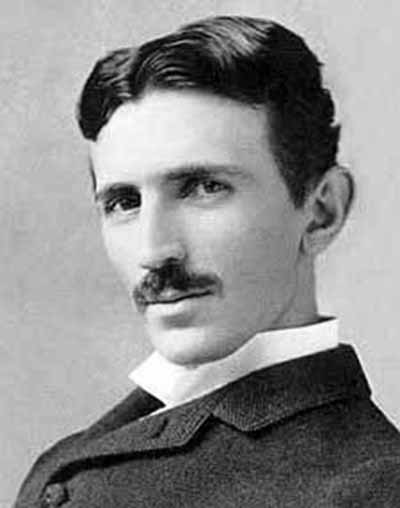
Nikola Tesla (July 9, 1856 - January 7, 1943) was a physicist, inventor, and electrical engineer of unusual intellectual brilliance and practical achievement. He was of Serb descent and worked mostly in the United States.
Tesla is most famous for conceiving the rotating magnetic field principle (1882) and then using it to invent the induction motor together with the accompanying alternating current long-distance electrical transmission system (1888). His patents and theoretical work still form the basis for modern alternating current electric power systems.
He also developed numerous other electrical and mechanical devices including the fundamental principles and machinery of wireless technology, including the high frequency alternator, the "AND" logic gate and the Tesla coil, as well as other devices such as the bladeless turbine, the spark plug and numerous other inventions.
Tesla was born to a Serbian family in the village of Smiljan near Gospic, in the Lika region in Krajina, Croatia (then part of the Austrian Empire). According to legend, he was born precisely at midnight during an electrical storm.
His father was Rev. Milutin Tesla, a priest in the Serbian Orthodox Church Metropolitanate of Sremski Karlovci. Milutin was born on 19 February 1819 in the village of Meduc, county Medak in Lika, Austrian Empire, as son of Nikola Tesla (b. 1789 in the military frontier, settled after his service in the Napoleonic Wars in Gospic in 1815) and Ana Kalinic, from the famous frontier Kalinic family. Tesla's family asserted its last name as such in Lika. His paternal origin is thought to be of the Draganic family from the Tara valley area below the geographical entity known as Old Vlach, from one of the local Serb clans; however genealogical research shows that Nikola is from the Herzegovinian noble Komnenovic (modern-day Old Herzegovina in Montenegro), from its Orlovic subgroup that traces its origin from the semi-mythic Pavle Orlovic that bore Prince Lazar's banner at the Battle of Kosovo in 1389. His mother was Duka Mandic, herself a daughter of a Serbian Orthodox Church priest. She came from a family domiciled in Lika and Banija, but with deeper origins to Kosovo. She was talented in making home craft tools. She memorized many Serbian epic poems, but never learned to read. His godfather, Jovan Drenovac, was a captain in the army protecting the Military Frontier.
Nikola was one of five children, having one brother (Dane, who was killed in a horse-riding accident when Nikola was five) and three sisters (Milka, Angelina and Marica). His family moved to Gospic in 1862. Tesla went to school in Karlovac. He finished a four year term in the span of three years.
Tesla then studied electrical engineering at the Austrian Polytechnic in Graz (1875). While there, he studied the uses of alternating current. Some sources say he received Baccalaureate degrees from the university at Graz. However, the university says that he did not receive a degree and did not continue beyond the first semester of his third year, during which he stopped attending lectures. In December 1878 he left Graz and broke all relations with his family. His friends thought that he had drowned in Mura. He went to Maribor, Slovenia, where he was first employed as an assistant engineer for a year. He suffered a nervous breakdown during this time. Tesla was later persuaded by his father to attend the Charles-Ferdinand University in Prague, which he attended for the summer term of 1880. Here he was influenced by Ernst Mach. However after his father died he left the university, having completed only one term.
Tesla engaged in reading many works, memorizing complete books, supposedly having a photographic memory. Tesla related in his autobiography that he experienced detailed moments of inspiration. During his early life, Tesla was stricken with illness time and time again. He suffered a peculiar affliction in which blinding flashes of light would appear before his eyes, often accompanied by hallucinations. Much of the time the visions were linked to a word or idea he might have come across; just by hearing the name of an item, he would involuntarily envision it in realistic detail. Modern-day synesthetes report similar symptoms. Tesla would visualise an invention in his brain in precise form before moving to the construction stage; a technique sometimes known as picture thinking. Tesla also often had flashbacks to events that had happened previously in his life; this began to happen during childhood.
Hungary and France
In 1881, he moved to Budapest, Hungary, to work under Tivadar Puskas in a telegraph company,the National Telephone Company. There, he met Nebojsa Petrovic, a young inventor from Austria. Although their encounter was brief, they did work on a project together using twin turbines to create continual power. On the opening of the telephone exchange in Budapest, 1881, Tesla became the chief electrician to the company, and was later engineer for the country's first telephone system. He also developed a device that, according to some, was a telephone repeater or amplifier, but according to others could have been the first loudspeaker.
In 1882 he moved to Paris, France, to work as an engineer for the Continental Edison Company, designing improvements to electric equipment. In the same year, Tesla conceived the induction motor and began developing various devices that use rotating magnetic fields (for which he received patents in 1888).
Soon thereafter, Tesla hastened from Paris to his mother's side as she lay dying, arriving hours before her death in April, 1892. Her last words to him were, "You've arrived, Nidzo, my pride." After her death, Tesla fell ill. He spent two to three weeks recuperating in Gospic and the village of Tomingaj near Gracac, the birthplace of his mother.
On June 6, 1884, Tesla first arrived in the US in New York City. He had little besides a letter of recommendation from Charles Batchelor, his manager in his previous job. In the letter of recommendation to Thomas Edison, Charles Batchelor wrote, "I know two great men and you are one of them; the other is this young man." Edison hired Tesla to work for his company Edison Machine Works. Tesla's work for Edison began with simple electrical engineering and quickly progressed to solving the company's most difficult problems. Tesla was offered the task of a complete redesign of the Edison company's direct current generators.
During his employment, Tesla claims Edison offered him $50,000 (equivalent to about $1 million in 2006, adjusted for inflation if he redesigned Edison's inefficient motor and generators, an improvement in both service and economy.
Tesla said he worked night and day to redesign them and gave the Edison company several profitable new patents in the process. During the year of 1885, when Tesla inquired about the payment on the work, Edison replied to him, "Tesla, you don't understand our American humor," and reneged on his promise. This anecdote is somewhat doubtful, since at Tesla's salary of $18 per week the bonus would have amounted to over 53 years pay, and the amount was equal to the initial capital of the company.Tesla resigned when he was refused a raise to $25 per week.
Tesla eventually found himself digging ditches for a short period of time - coincidentally for the Edison company. Edison had also never wanted to hear about Tesla's AC polyphase designs, believing that DC electricity was the future. Tesla focused intently on his AC polyphase system, even while digging ditches.
In 1886, Tesla formed his own company, Tesla Electric Light & Manufacturing. The initial financial investors disagreed with Tesla on his plan for an alternating current motor and eventually relieved him of his duties at the company. Tesla worked in New York as a common laborer from 1886 to 1887 to feed himself and raise capital for his next project.
In 1887, he constructed the initial brushless alternating current induction motor, which he demonstrated to the American Institute of Electrical Engineers (now IEEE) in 1888. In the same year, he developed the principles of his Tesla coil and began working with George Westinghouse at Westinghouse Electric & Manufacturing Company's Pittsburgh labs. Westinghouse listened to his ideas for polyphase systems which would allow transmission of alternating current electricity over large distances.
In April of 1887, Tesla began investigating what would later be called X-rays using his own single node vacuum tubes (similar to his patent #514,170 ). This device differed from other early X-ray tubes in that they had no target electrode. The modern term for the phenomenon produced by this device is bremsstrahlung (or braking radiation). We now know that this device operated by emitting electrons from the single electrode through a combination of field emission and thermionic emission. Once liberated, electrons are strongly repelled by the high electric field near the electrode during negative voltage peaks from the oscillating HV output of the Tesla Coil, generating X-rays as they collide with the glass envelope. He also used Geissler tubes. By 1892, Tesla became aware of what Wilhelm Röntgen later identified as effects of X-rays.
In the early research, Tesla devised several experimental setups to produce X-rays. Tesla held that, with his circuits, the "instrument will [... enable one to] generate Roentgen rays of much greater power than obtainable with ordinary apparatus." He also commented on the hazards of working with his circuit and single node X-ray producing devices. Of his many notes in the early investigation of this phenomenon, he attributed the skin damage to various causes. One of the options for the cause, which is not in conformity with conventional x-ray production, was that the ozone generated rather than the radiation was responsible.
Tesla continued research in the field and, later, observed an assistant severely "burnt" by X-rays in his lab. He performed several experiments prior to Roentgen's discovery (including photographing the bones of his hand; later, he sent these images to Roentgen) but didn't make his findings widely known; much of his research was lost in the 5th Avenue lab fire of March 1895.
A "world system" for "the transmission of electrical energy without wires" that depends upon the electrical conductivity was proposed in which transmission in various natural mediums with current that passes between the two point are used to power devices. In a practical wireless energy transmission system using this principle, a high-power ultraviolet beam might be used to form a vertical ionized channel in the air directly above the transmitter-receiver stations. The same concept is used in virtual lightning rods, the electrolaser electroshock weapon, and has been proposed for disabling vehicles.
Tesla demonstrated "the transmission of electrical energy without wires" that depends upon electrical conductivity as early as 1891. The Tesla effect (named in honor of Tesla) is the archaic term for an application of this type of electrical conduction (that is, the movement of energy through space and matter; not just the production of voltage across a conductor).
On July 30, 1891, he became a naturalized citizen of the United States at the age of 35. Tesla established his 35 South Fifth Avenue laboratory in New York during this same year. Later, Tesla would establish his Houston Street laboratory in New York at 46 E. Houston Street. There, at one point while conducting mechanical resonance experiments with electro-mechanical oscillators he generated a resonance of several surrounding buildings but, due to the frequencies involved, not his own building, causing complaints to the police.
As the speed grew he hit the resonant frequency of his own building and belatedly realizing the danger he was forced to apply a sledge hammer to terminate the experiment, just as the astonished police arrived. He also lit vacuum tubes wirelessly at both of the New York locations, providing evidence for the potential of wireless power transmission. Some of Tesla's closest friends were artists. He befriended Century Magazine editor Robert Underwood Johnson, who adapted several Serbian poems of Jovan Jovanovic Zmaj (which Tesla translated). Also during this time, Tesla was influenced by the Vedic philosophy teachings of the Swami Vivekananda.
When Tesla was 36 years old, the first patents concerning the polyphase power system were granted. He continued research of the system and rotating magnetic field principles. Tesla served, from 1892 to 1894, as the vice president of the American Institute of Electrical Engineers, the forerunner (along with the Institute of Radio Engineers) of the modern-day IEEE.
From 1893 to 1895, he investigated high frequency alternating currents. He generated AC of one million volts using a conical Tesla coil and investigated the skin effect in conductors, designed tuned circuits, invented a machine for inducing sleep, cordless gas discharge lamps, and transmitted electromagnetic energy without wires, building the first radio transmitter. In St. Louis, Missouri, Tesla made a demonstration related to radio communication in 1893. Addressing the Franklin Institute in Philadelphia, Pennsylvania and the National Electric Light Association, he described and demonstrated in detail its principles. Tesla's demonstrations were written about widely through various media outlets. Tesla also investigated harvesting energy that is present throughout space. He believed that it was just merely a question of time when men will succeed in attaching their machinery to the very wheelwork of nature.
At the 1893 World's Fair, the World's Columbian Exposition in Chicago, an international exposition was held which for the first time devoted a building to electrical exhibits. It was an historic event as Tesla and George Westinghouse introduced visitors to AC power by using it to illuminate the Exposition. On display were Tesla's fluorescent lamps and single node bulbs.
Tesla also explained the principles of the rotating magnetic field and induction motor by demonstrating how to make an egg made of copper stand on end in his demonstration of the device he constructed known as the "Egg of Columbus".
Also in the late 1880s, Tesla and Edison became adversaries in part due to Edison's promotion of direct current (DC) for electric power distribution over the more efficient alternating current advocated by Tesla and Westinghouse. Until Tesla invented the induction motor, AC's advantages for long distance high voltage transmission were counterbalanced by the inability to operate motors on AC. As a result of the "War of Currents," Edison and Westinghouse went nearly bankrupt, so in 1897, Tesla released Westinghouse from contract, providing Westinghouse a break from Tesla's patent royalties. Also in 1897, Tesla researched radiation which led to setting up the basic formulation of cosmic rays.
When Tesla was forty-one years old, he filed the first basic radio patent (U.S. Patent 645,576 ). A year later, he demonstrated a radio controlled boat to the US military, believing that the military would want things such as radio controlled torpedoes. Tesla had developed the "Art of Telautomatics", a form of robotics, as well as the technology of remote control.
In 1898, a radio-controlled boat was demonstrated to the public during an electrical exhibition at Madison Square Garden. These devices had an innovative coherer and a series of logic gates. Tesla called his boat a "teleautomaton" and said of it, "You see there the first of a race of robots, mechanical men which will do the laborious work of the human race."
Radio remote control remained a novelty until the 1960s. In the same year, Tesla devised an "electric igniter" or spark plug for Internal combustion gasoline engines. He gained U.S. Patent 609,250 , "Electrical Igniter for Gas Engines", on this mechanical ignition system. Tesla lived in the former Gerlach Hotel, renamed The Radio Wave building, at 49 W 27th St. (between Broadway and Sixth Avenue), Lower Manhattan, before the end of the century where he conducted the radio wave experiments. A commemorative plaque was placed on the building in 1977 to honor his work.
Wireless and the AIEE

Tesla served as the Vice-President of the American Institute of Electrical Engineers (now part of the IEEE) from 1892 to 1894. From 1893 to 1895, he investigated high frequency alternating currents. He generated AC of one million volts using a conical Tesla coil and investigated the skin effect in conductors, designed tuned circuits, invented a machine for inducing sleep, cordless gas discharge lamps, and transmitted electromagnetic energy without wires, effectively building the first radio transmitter.
In St. Louis, Missouri, Tesla made a demonstration related to radio communication (he demonstrated radio energy crossing space (one side of a stage to the other) in 1893. Addressing the Franklin Institute in Philadelphia, Pennsylvania and the National Electric Light Association, he described and demonstrated in detail its principles. Heinrich Hertz had made such demonstrations, repeatedly, five years previously. Hertz' demonstrations were not public (they were conducted during his physics lectures) but strictly speaking neither were Tesla's (the Franklin Institute didn't open to the general public until 1934).
Tesla held over forty U.S. patents (circa 1888) covering our entire system of Polyphase Alternating Current (AC). These patents are so novel that nobody could ever challenge them in the courts.
Tesla's four-tuned circuits (two on the receiving side and two on the transmitting side, secured by U.S. patents #645,576 and #649,621) were the basis of the U.S. Supreme Court decision (Case #369 decided June 21, 1943) to overturn Marconi's basic patent on the invention of radio.
World's Fair Exposition
At the 1893 World's Fair, the World Columbian Exposition in Chicago, Illinois, an international exposition was held which for the first time devoted a building to electrical exhibits. It was a historic event as Tesla and George Westinghouse introduced visitors to AC power by using it to illuminate the Exposition. In protest, Edison would not allow use of any of his lightbulbs for this event.
As if lighting the Exposition was not enough, Tesla explained the principles of the rotating magnetic field and induction motor by demonstrating how to make an egg (made of copper) stand on end in his version of the Egg of Columbus.
War of currents
In the "War of Currents" era in the late 1880s, Nikola Tesla and Thomas Edison became adversaries due to Edison's promotion of direct current (DC) for electric power distribution over the more efficient alternating current (AC) advocated by Tesla.
1896-1899
When Tesla was 41 years old, he filed the first basic radio patent (No. US645576). A year later, he demonstrated a remote controlled boat to the US military, believing that the military would want things such as radio-guided torpedoes. In 1898 a radio controlled boat was also demonstrated to the public during an electrical exhibition at Madison Square Garden. These devices had an innovative coherer and a series of logic gates. Radio remote control remained a novelty until the Space Age. In the same year, Tesla devised an electric igniter for gasoline engines which was nearly identical to ideas about the same process used by modern internal combustion engines.
In 1896, according to an interview he gave in 1916, Tesla invented a type of loudspeaker. The sounds were of the quality of the telephones of that time. The invention was never patented nor released publicly (till years later by Tesla himself).
As a result of the "War of Currents" Edison and Westinghouse were almost bankrupt, so in 1897 Tesla released Westinghouse from contract providing Westinghouse a break from Tesla's AC motor royalties.
Colorado Springs
In 1899, Tesla decided to move and began research in Colorado Springs, Colorado, where he could have room for his high-voltage high-frequency experiments. He chose this location primarily because of the frequent thunderstorms, the high altitude (where the air, being at a lower pressure, had a lower dielectric breakdown strength, making it easier to ionize), and the dryness of the air (minimizing leakage of electric charge through insulators). Also, the property was free and electric power available from the El Paso Power Company. Today, magnetic intensity charts also show that the ground around his lab possesses a denser magnetic field than the surrounding area. Tesla reached Colorado Springs on May 17, 1899. Upon his arrival he told reporters that he was conducting experiments transmitting signals from Pikes Peak to Paris.
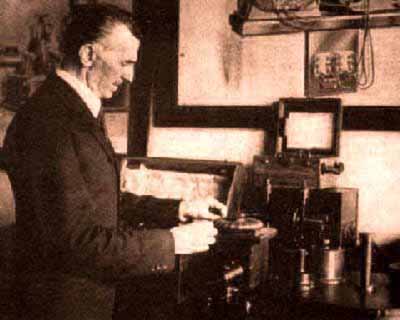
Tesla kept a diary of his experiments in the Colorado Springs lab where he spent nearly nine months. It consists of 500 pages of handwritten notes and nearly 200 drawings, recorded chronologically between June 1, 1899 and January 7, 1900, as the work occurred, containing explanations of his experiments. He was developing a system for wireless telegraphy, telephony and the transmission of power, experimented with high-voltage electricity and the possibility of wireless transmitting and distributing large amounts of electrical energy over long distances. He also conceived a system for geophysical exploration--seismology--which he called telegeodynamics, based on his reciprocating mechanical oscillator patented in 1894, and explained that a long sequence of small explosions could be used to find ore and create earthquakes large enough to destroy the Earth. He did not experiment with this as he felt there would not be "a desirable outcome".
Much of what Tesla discovered while in this lab has been lost to history and Tesla's own secrecy. To this very day there is talk of Tesla's Death Ray being invented there as well as communication with other planets. How much of this is true is now unknown, but has made Tesla's time at this remote lab a wellspring for Urban legends about him.
Laboratory construction
Tesla, a local contractor, and several assistants commenced the construction of the laboratory shortly after arriving in Colorado Springs. The lab was established on Knob Hill, east of the Colorado School for the Deaf and Blind and one mile (1.6 km) east of downtown. Its primary purposes were experiments with high frequency electricity and other phenomena, and secondary--research into wireless transmission of electrical power.
Tesla's design of the lab was a building fifty feet by sixty feet (15 by 18 m) with eighty-foot (24 m) ceilings. A one-hundred-forty-two foot (43 m) conducting aerial with a thirty-inch (760 mm) copper-foil-covered wooden ball was erected on the roof. The roof was rolled back to prevent fire from sparks and other dangerous effects of the experiments. The laboratory had sensitive instruments and equipment.
Magnifying transmitter
Missing imageTesla_colorado_444px.jpgDouble exposure publicity photo of Tesla sitting in his laboratory in Colorado Springs with his "magnifying transmitter" generating millions of volts of electricity. The arcs are about 22 feet (7 m) long.
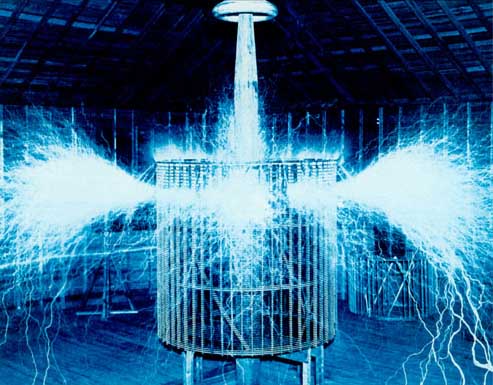
The lab possessed the largest Tesla Coil ever built, fifty-two feet (16 m) in diameter, known as the Magnifying Transmitter (further MT). Not identical to a classic Tesla Coil, it was a three-coil magnifying system requiring different forms of analysis than lumped-constant coupled resonant coils presently described to most. It resonated at a natural quarter wavelength frequency and could work in a continuous-wave mode and in a partially damped-wave resonant mode.
According to accounts, Tesla used it to transmit tens of thousands of watts of power wirelessly; it could generate millions of volts of electricity and produce lightning bolts more than one-hundred feet (30 m) long. Tesla posted a large fence around it with a sign "Keep Out - Great Danger".
Tesla became the first man to create electrical effects on the scale of lightning. The MT produced thunder which was heard as far away as Cripple Creek. People near the lab would observe sparks emitting from the ground to their feet and through their shoes. Some have observed electrical sparks from the fire hydrants (Tesla for a time grounded out to the plumbing of the city). The area around the laboratory would glow with a blue corona (similar to St. Elmo's Fire).
One of Tesla's experiments with the MT destroyed Colorado Springs Electric Company's generator by backfeeding the city's power generators, and blacked out the city. The company denied Tesla further access to the backup generator's feed if he did not repair the primary generator at his own expense; it was working again in a few days.
Tuned circuits
Tesla also constructed many smaller resonance transformers and discovered the concept of tuned electrical circuits. He also developed a number of coherers for separating and perceiving electromagnetic waves and designed rotating coherers which he used to detect the unique types of electromagnetic phenomenon he observed. They had a mechanism of geared wheels driven by a coiled spring-drive mechanism which rotated small glass cylinders. These experiments were the final stage of years of work on synchronized tuned electrical circuits.
These transceivers were constructed to demonstrate how signals could be "tuned in". Tesla logged in his diary on July 3, 1899 that a separate resonance transformer tuned to the same high frequency as a larger high-voltage resonance transformer would transceive energy from the larger coil, acting as a transmitter of wireless energy, which was used to confirm Tesla's patent for radio during later disputes in the courts. These air core high-frequency resonate coils were the predecessors of systems from radio to radar and medical magnetic resonance imaging devices.
Propagation and resonance
On July 3, 1899, Tesla discovered terrestrial stationary waves within the earth. He demonstrated that the Earth behaves as a smooth polished conductor and possesses electrical vibrations. He experimented with waves characterized by a lack of vibration at points, between which areas of maximum vibration occur periodically. These standing waves were produced by confining waves within constructed conductive boundaries. Tesla demonstrated that the Earth could respond at predescribed frequencies of electrical vibrations. At this time, Tesla realized that it was possible to transceive power around the globe. A few years later, George Westinghouse stopped funding Tesla's research when Tesla showed him that he could offer free electricity to the whole world by simply "ramming a stick in the earth in your backyard". Westinghouse said he would go bankrupt if that happened.
Tesla conducted experiments contributing to the understanding of electromagnetic propagation and the Earth's resonance. It is well documented (from various photos from the time) that he lit hundreds of lamps wirelessly at a distance of up to twenty-five miles (40 km). He transmitted signals several kilometres and lit neon tubes conducting through the ground. He researched ways to transmit energy wirelessly over long distances. He transmitted extremely low frequencies through the ground in his experiments and made mathematical calculations and computations based on his experiments and discovered that the resonant frequency of the Earth was approximately 8 Hz (Hertz). In the 1950s, researchers confirmed resonant frequency was in this range (interesting to note, Theta brain waves also cycle in this range).
Cosmic waves
In the Colorado Springs lab, Tesla recorded what he concluded were extraterrestrial radio signals and announced his findings in some of the scientific journals of the time. [5] His announcements and data were rejected by the scientific community who did not believe him. He notes measurements of repetitive signals from his receiver which are substantially different from the signals he had noted from storms and earth noise. Specifically, he later recalled that the signals appeared in groups of clicks 1, 2, 3, and 4 clicks together. He stated in the article "A Giant Eye to See Round the World", of February 25, 1923, that:
- "Twenty-two years ago, while experimenting in Colorado with a wireless power plant, I obtained extraordinary experimental evidence of the existence of life on Mars. I had perfected a wireless receiver of extraordinary sensitiveness, far beyond anything known, and I caught signals which I interpreted as meaning 1--2--3--4. I believe the Martians used numbers for communication because numbers are universal."
Clearly, Tesla felt the signal groups originated on the planet Mars. In 1996 Corum and Corum published an analysis of Jovian plasma torus signals which indicate that there was a correspondence between the setting of Mars at Colorado Springs, and the cessation of signals from Jupiter in the summer of 1899 when Tesla was there. Further, analysis by the Corums indicate that Tesla's transceiver was sensitive in the 18 kHz gap in the Kennelly-Heaviside layer which would have allowed that reception from Jupiter. Therefore, there is evidence the signals Tesla noticed came from Jupiter, among other possible sources. Tesla spent the latter part of his life trying to signal Mars.
It is important to recognize that when he says he "recorded" these signals, it is meant that he wrote down the data and his impressions of what he had heard. He did release reports at the time. Tesla¹s initial announcement of the existence of extraterrestrial radio signals was in 1899. In March of 1907, Tesla wrote about signaling to Mars in Harvard Magazine and how it was a problem of electrical engineering. Additional descriptions come from remembrances twenty years later. All this was met with resistance and disbelief by his contemporaries.
Colorado Departure
Tesla left Colorado Springs on January 7, 1900. The lab was torn down, broken up, and its contents sold to pay debts. The Colorado experiments prepared Tesla for his next project, the establishment of a wireless power transmission facility that would be known as Wardenclyffe. On March 21, 1900, Tesla was granted US685012 patent for the means for increasing the intensity of electrical oscillations.
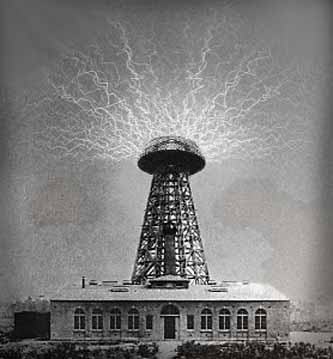
In 1900, with $150,000 (51 % from J. Pierpont Morgan), Tesla began planning the Wardenclyffe Tower facility. In June 1902, Tesla's lab operations were moved to Wardenclyffe from Houston Street. The tower was finally dismantled for scrap during World War I. Newspapers of the time labeled Wardenclyffe "Tesla's million-dollar folly." In 1904, the US Patent Office reversed its decision and awarded Guglielmo Marconi the patent for radio, and Tesla began his fight to re-acquire the radio patent. On his 50th birthday in 1906, Tesla demonstrated his 200 hp (150 kW) 16,000 rpm bladeless turbine. During 19101911 at the Waterside Power Station in New York, several of his bladeless turbine engines were tested at 1005000 hp.
Since the Nobel Prize in Physics was awarded to Marconi for radio in 1909, Thomas Edison and Tesla were mentioned as potential laureates to share the Nobel Prize of 1915 in a press dispatch, leading to one of several Nobel Prize controversies. Some sources have claimed that due to their animosity toward each other neither was given the award, despite their enormous scientific contributions, and that each sought to minimize the other one's achievements and right to win the award, that both refused to ever accept the award if the other received it first, and that both rejected any possibility of sharing it.
In the following events after the rumors, neither Tesla nor Edison won the prize (although Edison did receive one of 38 possible bids in 1915, and Tesla did receive one bid out of 38 in 1937).
Earlier, Tesla alone was rumored to have been nominated for the Nobel Prize of 1912. The rumored nomination was primarily for his experiments with tuned circuits using high-voltage high-frequency resonant transformers.
In 1915, Tesla filed a lawsuit against Marconi attempting, unsuccessfully, to obtain a court injunction against the claims of Marconi. After Wardenclyffe, Tesla built the Telefunken Wireless Station in Sayville, Long Island. Some of what he wanted to achieve at Wardenclyffe was accomplished with the Telefunken Wireless. In 1917, the facility was seized and torn down by the Marines, because it was suspected that it could be used by German spies.
Prior to World War I, Tesla looked overseas for investors to fund his research. When the war started, Tesla lost the funding he was receiving from his European patents. After the war ended, Tesla made predictions regarding the relevant issues of the post-World War I environment, in a printed article (December 20, 1914).
Tesla believed that the League of Nations was not a remedy for the times and issues. Tesla started to exhibit pronounced symptoms of obsessive-compulsive disorder in the years following. He became obsessed with the number three; he often felt compelled to walk around a block three times before entering a building, demanded a stack of three folded cloth napkins beside his plate at every meal, etc. The nature of OCD was little understood at the time and no treatments were available, so his symptoms were considered by some to be evidence of partial insanity, and this undoubtedly hurt what was left of his reputation.
At this time, he was staying at the Waldorf-Astoria Hotel, renting in an arrangement for deferred payments. Eventually, the Wardenclyffe deed was turned over to George Boldt, proprietor of the Waldorf-Astoria to pay a $20,000 debt. In 1917, around the time that the Wardenclyffe Tower was demolished by Boldt to make the land a more viable real estate asset, Tesla received AIEE's highest honor, the Edison Medal.
Tesla, in August 1917, first established principles regarding frequency and power level for the first primitive RADAR units.
In 1934, Emile Girardeau, working with the first French RADAR systems, stated he was building RADAR systems "conceived according to the principles stated by Tesla". By the twenties, Tesla was reportedly negotiating with the United Kingdom government about a ray system. Tesla had also stated that efforts had been made to steal the so called "death ray". It is suggested that the removal of the Chamberlain government ended negotiations.
On Tesla's seventy-fifth birthday in 1931, Time magazine put him on its cover. The cover caption noted his contribution to electrical power generation. Tesla received his last patent in 1928 for an apparatus for aerial transportation which was the first instance of VTOL aircraft. By the end of 1931, Tesla released "On Future Motive Power" which covered an ocean thermal energy conversion system.
In 1934, Tesla wrote to consul Jankovic of his homeland. The letter contained the message of gratitude to Mihajlo Pupin who initiated a donation scheme by which American companies could support Tesla. Tesla refused the assistance, and chose to live by a modest pension received from Yugoslavia and to continue researching.
In 1936, Tesla stated "I'm equally proud of my Serbian origin and my Croatian homeland."
When he was eighty-one, Tesla stated he had completed a dynamic theory of gravity. He stated that it was "worked out in all details" and that he hoped to soon give it to the world. The theory was never published. At the time of his announcement, it was considered by the scientific establishment to exceed the bounds of reason. Some believe that Tesla never fully developed the Unified Field Theory.
The bulk of the theory was developed between 1892 and 1894, during the period that he was conducting experiments with high frequency and high potential electromagnetism and patenting devices for their utilization. It was completed, according to Tesla, by the end of the 1930s. Tesla's theory explained gravity using electrodynamics consisting of transverse waves (to a lesser extent) and longitudinal waves (for the majority). Reminiscent of Mach's principle.

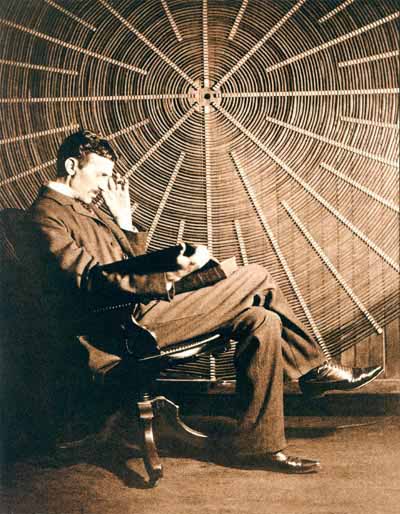
Nikola Tesla, with Ruder Boskovic's book Theoria Philosophiae Naturalis, sits in front of the spiral coil of his high-frequency transformer at East Houston Street, New York.
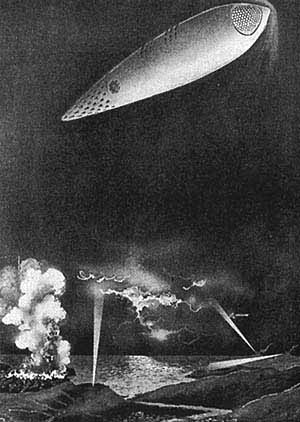
Later in life, Tesla made some remarkable claims concerning a "teleforce" weapon. The press called it a "peace ray" or death ray.

In total, the components and methods included:
Tesla worked on plans for a directed-energy weapon between the early 1900s till the time of his death. In 1937, Tesla composed a treatise entitled "The Art of Projecting Concentrated Non-dispersive Energy through the Natural Media" concerning charged particle beams. Tesla published the document in an attempt to expound on the technical description of a "superweapon that would put an end to all war". This treatise of the particle beam is currently in the Nikola Tesla Museum archive in Belgrade. It described an open ended vacuum tube with a gas jet seal that allowed particles to exit, a method of charging particles to millions of volts, and a method of creating and directing nondispersive particle streams (through electrostatic repulsion).
Records of his indicate that it was based on a narrow stream of atomic clusters of liquid mercury or tungsten accelerated via high voltage (by means akin to his magnifying transformer). Tesla gave the following description concerning the particle gun's operation:
- [The nozzle would] send concentrated beams of particles through the free air, of such tremendous energy that they will bring down a fleet of 10,000 enemy airplanes at a distance of 200 miles from a defending nation's border and will cause armies to drop dead in their tracks.
The weapon could be used against ground based infantry or for antiaircraft purposes. Tesla tried to interest the US War Department in the device. He also offered this invention to European countries. None of the governments purchased a contract to build the device. He was unable to act on his plans.
Tesla began to theorize about electricity and magnetism's power to warp, or rather change, space and time and the procedure by which man could forcibly control this power. Near the end of his life, Tesla was fascinated with the idea of light as both a particle and a wave, a fundamental proposition already incorporated into quantum physics.
This field of inquiry led to the idea of creating a "wall of light" by manipulating electromagnetic waves in a certain pattern. This mysterious wall of light would enable time, space, gravity and matter to be altered at will, and engendered an array of Tesla proposals that seem to leap straight out of science fiction, including anti-gravity airships, teleportation, and time travel.
The single strangest invention Tesla ever proposed was probably the "thought photography" machine. He reasoned that a thought formed in the mind created a corresponding image in the retina, and the electrical data of this neural transmission could be read and recorded in a machine. The stored information could then be processed through an artificial optic nerve and played back as visual patterns on a viewscreen.

Another of Tesla's theorized inventions is commonly referred to as Tesla's Flying Machine, which appears to resemble an ion-propelled aircraft. Tesla claimed that one of his life goals was to create a flying machine that would run without the use of an airplane engine, wings, ailerons, propellers, or an onboard fuel source. Initially, Tesla pondered about the idea of a flying craft that would fly using an electric motor powered by grounded base stations. As time progressed, Tesla suggested that perhaps such an aircraft could be run entirely electro-mechanically. The theorized appearance would typically take the form of a cigar or saucer.
Tesla died of heart failure alone in Room 3327 of the New Yorker Hotel, some time between the evening of January 5 and the morning of January 8, 1943, at the age of 86.[90] Despite selling his AC electricity patents, Tesla was destitute and died with significant debts. Later that year the US Supreme Court upheld Tesla's patent number U.S. Patent 645,576 in effect recognizing him as the inventor of radio.
Immediately after Tesla's death became known, the Federal Bureau of Investigation instructed the government's Alien Property Custodian office to take possession of his papers and property, despite his US citizenship. His safe at the hotel was also opened.
At the time of his death, Tesla had been continuing work on the teleforce weapon, or death ray, that he had unsuccessfully marketed to the US War Department. It appears that his proposed death ray was related to his research into ball lightning and plasma and was imagined as a particle beam weapon.
The US government did not find a prototype of the device in the safe. After the FBI was contacted by the War Department, his papers were declared to be top secret. The so-called "peace ray" constitutes a part of some conspiracy theories as a means of destruction. The personal effects were seized on the advice of presidential advisers, and J. Edgar Hoover declared the case "most secret", because of the nature of Tesla's inventions and patents. One document states that "[he] is reported to have some 80 trunks in different places containing transcripts and plans having to do with his experiments". Charlotte Muzar reported that there were several "missing" papers and property.
Tesla did not like to pose for portraits. He did it only once for princess Vilma Lwoff-Parlaghy. His wish was to have a sculpture made by his close friend Ivan Mestrovic, who was at that time in United States, but he died before getting a chance to see it. Mestrovic made a bronze bust (1952) that is held in the Nikola Tesla Museum in Belgrade and a statue (1955/56) placed at the Ruder Boskovic Institute in Zagreb. This statue was moved to Nikola Tesla Street in Zagreb's city centre on the 150th anniversary of Tesla's birth, with the Ruder Boskovic Institute to receive a duplicate. In 1976, a bronze statue of Tesla was placed at Niagara Falls, New York. A similar statue was also erected in his hometown of Gospic in 1986.
The SI unit tesla (T) for measuring magnetic flux density or magnetic induction (commonly known as the magnetic field ) was named in Tesla¹s honour at the Conférence Générale des Poids et Mesures, Paris in 1960.
The Institute of Electrical and Electronics Engineers (IEEE) of which Tesla had been vice president also created an award in recognition of Tesla. Called the IEEE Nikola Tesla Award, it is given to individuals or a team that has made outstanding contributions to the generation or utilization of electric power, and is considered the most prestigious award in the area of electric power.
The Tesla crater on the far side of the Moon and the minor planet 2244 Tesla are also named after him.
Nikola Tesla Wikipedia
Nikola Tesla Google Videos
"There manifests itself in the fully developed being, Man, a desire mysterious, inscrutable and irresistible: to imitate nature, to create, to work himself the wonders he perceives. Long ago he recognized that all perceptible matter comes from a primary substance, or tenuity beyond conception, filling all space, the Akasa or luminiferous ether, which is acted upon by the life giving Prana or creative force, calling into existence, in never ending cycles all things and phenomena. The primary substance, thrown into infintesimal whirls of prodigious velocity, becomes gross matter; the force subsiding, the motion ceases and matter disappears, reverting to the primary substance." - Man's Greatest Achievement, 1907
"So astounding are the facts in this connection, that it would seem as though the Creator, himself had electrically designed this planet." - Tesla describing what is now known as Schumann Resonance (7.8Hz) in The Transmission of Electrical Energy Without Wires As A Means Of Furthering World Peace 1905.
"Of all the frictional resistances, the one that most retards human movement is ignorance, what Buddha called 'the greatest evil in the world.' The friction which results from ignorance can be reduced only by the spread of knowledge and the unification of the heterogeneous elements of humanity. No effort could be better spent."
"Science is but a perversion of itself unless it has as its ultimate goal the betterment of humanity."
Carl Sagan: A life in the cosmos

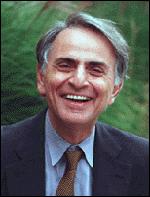
Carl Edward Sagan (November 9, 1934 December 20, 1996) was an American astronomer and science popularizer. He pioneered exobiology and promoted the Search for ExtraTerrestrial Intelligence (SETI). He is world-famous for his popular science books and the television series Cosmos, which he co-wrote and presented. In his works he frequently advocated the scientific method.
Education and scientific career
Carl Sagan was born in Brooklyn, New York. His father, Sam Sagan, was a Jewish garment worker and his mother, Rachel Molly Gruber, was a housewife. Sagan attended the University of Chicago, where he received a bachelor's degree (1955) and a master's degree (1956) in physics, before earning his doctorate (1960) in astronomy and astrophysics. He taught at Harvard University until 1968, when he moved to Cornell University.
Sagan became a full professor at Cornell in 1971 and directed a lab there. He contributed to most of the unmanned space missions that explored our solar system. He conceived the idea of adding an unalterable and universal message on spacecraft destined to leave the solar system, that could be understood by any extraterrestrial intelligence that might find it. The first message that was actually sent into space was a gold-anodized plaque attached to the space probe Pioneer 10. He continued to refine his designs and the most elaborate such message he helped to develop was the Voyager Golden Record that was sent out with the Voyager space probes.
Scientific achievements
Sagan was among the first to hypothesize that Titan and Jupiter's moon Europa may possess oceans (a subsurface ocean in the case of Europa) or lakes. Thus making the hypothesized water ocean on Europa potentially habitable for life. Europa's subsurface ocean was later indirectly confirmed by the spacecraft Galileo.
He furthered insights regarding the atmosphere of Venus, seasonal changes on Mars, and Saturn's moon Titan. Sagan established that the atmosphere of Venus is extremely hot and dense. He also perceived global warming as a growing, man-made danger and likened it to the natural development of Venus into a hot life-hostile planet through greenhouse gases. He suggested that the seasonal changes on Mars were due to windblown dust, not to vegetation changes, as others had proposed.
Scientific advocacy
Sagan was a proponent of the search for extraterrestrial life. He urged the scientific community to listen with large radio telescopes for signals from intelligent extraterrestrial lifeforms. He advocated sending probes to other planets. Sagan was Editor in Chief of Icarus (a professional journal concerning planetary research) for 12 years. He cofounded the Planetary Society and was a member of the SETI Institute Board of Trustees.
He was well known as a coauthor of the scientific paper that predicted nuclear winter would follow nuclear war. Sagan famously predicted that smoky oil fires in Kuwait (set by Saddam Hussein's army) would cause an ecological disaster of black clouds. Retired atmospheric physicist Fred Singer dismissed Sagan's prediction as nonsense, predicting that the smoke would dissipate in a matter of days.
Social concerns
Sagan believed that the Drake equation suggested that a large number of extraterrestrial civilizations would form, but that the lack of evidence of such civilizations (the Fermi paradox) suggests that technological civilizations tend to destroy themselves rather quickly. This stimulated his interest in identifying and publicizing ways that humanity could destroy itself, with the hope of avoiding such destruction and eventually becoming a space-faring species.
Sagan, a life-long follower of liberalism, became more politically active after marrying leftist Ann Druyan and performed acts of civil disobedience at nuclear weapons sites during the Nuclear Freeze era. He spoke out against President Ronald Reagan's Strategic Defense Initiative, or "Star Wars" program, which he felt was technically impossible to build and perfect, far more expensive to create than for an enemy to defeat through decoys and other means, and destabilizing to Cold War nuclear weapons disarmament progress.
Carl Sagan was an avid user of marijuana, although he never publicly admitted it during his life. Under the pseudonym "Mr. X," he wrote an essay concerning cannabis smoking in the 1971 book Marihuana Reconsidered, whose editor was Lester Grinspoon. In the essay Sagan commented that marijuana encouraged some of his works and enhanced experiences. After Sagan's death, Grinspoon disclosed this to Sagan's biographer Keay Davidson. When the biography, entitled Carl Sagan: A Life, was published in 1999, the marijuana exposure stirred some media attention.
Popularization of science
Sagan's capability to convey his ideas allowed many people to better understand the cosmos. He delivered the 1977/1978 Christmas Lectures for Young People at the Royal Institution. He wrote (with Ann Druyan, eventually his third wife) and narrated the highly popular thirteen part PBS television series Cosmos (modeled on Jacob Bronowski's The Ascent of Man); he also wrote books to popularize science (The Dragons of Eden, which won a Pulitzer Prize, Broca's Brain, etc.) and a novel, Contact, that was a best-seller and had a film adaptation starring Jodie Foster in 1997. The film won the 1998 Hugo Award.
From Cosmos and his frequent appearances on The Tonight Show, Sagan became associated with the catch phrase "billions and billions." (He never actually used that phrase in Cosmos, but his distinctive delivery and frequent use of billions made this a favorite phrase of Johnny Carson and others doing the many affectionate impressions of him. Sagan took this in good humor, and his final book was entitled Billions and Billions - see below.) The humorous unit of the Sagan has now been coined to stand for any count of at least 4,000,000,000.
He wrote a sequel to Cosmos, Pale Blue Dot: A Vision of the Human Future in Space, which was selected as a notable book of 1995 by The New York Times. Carl Sagan also wrote an introduction for the best selling book by Stephen Hawking, A Brief History of Time.
Sagan presents a speculation concerning the origin of the swastika symbol in his book, Comet. Sagan hypothesized that a comet approached so close to Earth in antiquity that the jets of gas streaming out of it were visible, bent by the comet's rotation. The book Comet reproduces an ancient Chinese manuscript that shows comet tail varieties; most are variations on simple comet tails, but the last shows the comet nucleus with four bent arms extending from it, showing a swastika.
Sagan caused mixed reactions among other professional scientists. On the one hand, there was general support for his popularization of science, his efforts to increase scientific understanding among the general public, and his positions in favor of skepticism and against pseudoscience.
On the other hand, there was some unease that the public would misunderstand some of the personal positions and interests that Sagan took as being part of the scientific consensus rather than his own personal views, and there was some unease, which some believe to have been motivated in part by professional jealousy, that scientific views contrary to those that Sagan took (such as on the severity of nuclear winter) were not being sufficiently presented to the public.
His comments on the Kuwait oil well fires during the first Gulf War were shown later to be in error; Sagan himself acknowledged his error in print.Late in his life, Sagan's books developed his skeptical, naturalistic view of the world.
In The Demon-Haunted World: Science as a Candle in the Dark, he presented tools for testing arguments and detecting fallacious or fraudulent ones, essentially advocating wide use of the scientific method.
In The Demon-Haunted World, Sagan gave a list of errors he had made (including his predictions about the effects of the Kuwaiti oil fires) as an example of how science is self-correcting.
The compilation Billions and Billions: Thoughts on Life and Death at the End of the Millennium, published after Sagan's death, contains essays written by Sagan, such as his views on abortion, and Ann Druyan's account of his death as a non-believer.
Personality
In 1994, Apple Computer began developing the Power Macintosh 7100. They chose the internal code name "Carl Sagan," in honor of the astronomer.
Though the project name was strictly internal and never used in public marketing, when Sagan learned of this internal usage, he sued Apple Computer to use a different project name - other projects had names like "Cold fusion" and "Piltdown Man", and he was displeased at being associated with what he considered pseudoscience.
Though Sagan lost the suit, Apple engineers complied with his demands anyway, renaming the project "BHA" (Butthead Astronomer). Sagan sued Apple for libel over the new name, claiming that it subjected him to contempt and ridicule. Sagan lost this lawsuit as well; still, the 7100 saw another name change: it was now called "LAW" (Lawyers Are Wimps).
Sagan is regarded by most as an atheist or agnostic, observing statements such as: "The idea that God is an oversized white male with a flowing beard who sits in the sky and tallies the fall of every sparrow is ludicrous. But if by 'God' one means the set of physical laws that govern the universe, then clearly there is such a God. This God is emotionally unsatisfying... it does not make much sense to pray to the law of gravity."
Sagan married three times; the famous biologist Lynn Margulis (mother of Dorion Sagan) in 1957, artist Linda Salzman (mother of Nick Sagan) in 1968, and author Ann Druyan (mother of Sasha and Sam) in 1981, to whom he remained married until his death.
Legacy
After a long and difficult fight with myelodysplasia, Sagan died at the age of 62, on December 20, 1996, at the Fred Hutchinson Cancer Research Center in Seattle, Washington. Sagan was a significant figure, and his supporters credit his importance to his popularisation of the natural sciences, opposing both restraints on science and reactionary applications of science, defending democratic traditions, resisting nationalism, defending humanism, and arguing against geocentric and anthropocentric views.
The landing site of the unmanned Mars Pathfinder spacecraft was renamed the Carl Sagan Memorial Station in honor of Dr. Sagan on July 5, 1997. Asteroid 2709 Sagan is also named in his honor.
The 1997 movie Contact, based on Sagan's novel of the same name, and finished after his death, ends with the dedication "For Carl."In an episode of Star Trek: Enterprise, a quick shot is shown of the relic rover Sojourner, part of the Mars Pathfinder mission, placed by a historical marker at Carl Sagan Memorial Station on the Martian surface. The marker displays a quote from Sagan: "Whatever the reason you're on Mars, I'm glad you're there, and I wish I was with you."
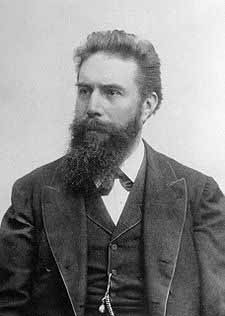
Wilhelm Conrad Rontgen

Rontgen, Wilhelm Conrad - born March 27, 1845, Lennep, Prussia [now Remscheid, Ger.] d. Feb. 10, 1923, Munich - German physicist who was a recipient of the first Nobel Prize for Physics, in 1901, for his discovery of X rays, which heralded the age of modern physics and revolutionized diagnostic medicine.
Rontgen studied at the Polytechnic in Zürich and then was professor of physics at the universities of Strasbourg (1876-79), Giessen (1879-88), Wurzburg (1888-1900), and Munich (1900-20). His research also included work on elasticity, capillary action of fluids, specific heats of gases, conduction of heat in crystals, absorption of heat by gases, and piezoelectricity.
In 1895, while experimenting with electric current flow in a partially evacuated glass tube (cathode-ray tube), Röntgen observed that a nearby piece of barium platinocyanide gave off light when the tube was in operation.
He theorized that when the cathode rays (electrons) struck the glass wall of the tube, some unknown radiation was formed that traveled across the room, struck the chemical, and caused the fluorescence.
Further investigation revealed that paper, wood, and aluminum, among other materials, are transparent to this new form of radiation. He found that it affected photographic plates, and, since it did not noticeably exhibit any properties of light, such as reflection or refraction, he mistakenly thought the rays were unrelated to light.
In view of its uncertain nature, he called the phenomenon X-radiation, though it also became known as Rontgen radiation.
He took the first X-ray photographs, of the interiors of metal objects and of the bones in his wife's hand.
Max Planck

Max Karl Ernst Ludwig Planck was born on 23 April in Kiel Germany. He was the sixth child in a family devoted to the church and state. His father was a prominent jurist and professor of law at the University of Kiel. At the age of 9, his father received a post at the University of Munich, and Planck attended the Maximilian Gymnasium. While there Planck succeeded very well in all subjects and he gained an interest in physics and mathematics finally graduating at the age of 17.
He found it difficult to make a decision on what career he was going to aim for, finally settling for physics rather than music or classical philogy, since he believed he had his greatest originality within that physics. He was an excellent pianist and found great pleasure in playing, having the gift of absolute pitch. Another passion of his was hiking, mountain climbing and taking long walks as regularly as possible.
In 1874 Planck entered the University of Munich, and was unimpressed with his physics professor there, Professor Phillip von Jolly. He did, however, find intellectual stimulation through self study. Planck was deeply impressed by the law of conservation of energy and he became convinced that the second law of termodynamics was an absolute law of nature.
Planck based his doctoral dissertation on the second law of thermodynamics and in July 1879, at the young age of 21 he received his doctoral degree. Following this he completed his qualifying dissertation at Munich and he employed as a lecturer (Privatdozent). With the help of his father in 1885 he took up the position of associate professor at the University of Kiel becoming a full professor in 1892 at the University of Berlin when Kirchoff died. Planck lectured on all branches of theoretical physics and had nine doctoral students study under him.
Planck was intrigued by the law discovered by his colleague Wilhelm Wien in 1896. He made several attempts at deriving this law, starting from the second law of thermodynamics as a base Experimental evidence was coming to light which showed that Wiens law broke down completely at low frequencies but was perfectly viable at high frequencies.
Plank guessed that, since the entropy of radiation depended mathematically on it's energy in the high frequency range due to Wiens law, and that because he knew what the dependance was in the low frequency region, he should somehow combine these two properties in some simple manner resulting in a formula relating frequency, to the energy of radiation. The formula was hailed a great success, but Planck noted that it was just a formula; a lucky guess which still had to be derived from first principles inorder to give it a proper scientific standing.
In 1900, at the age of 42, Planck achieved this, but in the process he had to abandon one of his greatest beliefs - that the second law of thermodynamics was an absolute law of nature. He was forced to accept Ludwig Boltzmann's statistical explanation for the second law. Planck also had to assume that the black body oscillators could only absorb and emit energy in discrete amounts of energy - packets of energy which he called quanta. Only by carrying out a statistical analysis of these quanta of energy could Planck derive his formula.
Each quanta contained an energy directly proportional to a constant, h, multiplied by the frequency of oscillation of the particular blackbody oscillator associated with that quanta. Using his formula he calculated a value for Boltzmanns constant, Avogadros numer, the charge of the electron as well as the constant h. As time passed others came to realise that because of the finite, non-zero value of h, the world at atomic dimensions could not be explained with classical mechanics. The quantum age had truly begun!
Planck was very reluctant to introduce his revolutionary idea on the quantisation of energy, and only by being forced by pure logic did he do so. It took a number of years before Planck's ideas were generally recognised and it was the likes of Einstein, Bohr and Poincare who developed the quantum idea further in the early half of the century.
In 1912 Planck became the permanent scretary of the mathematics and physics sections of the Prussian Academy of Sciences and continued to hold the post until 1938.
In 1918 he received the Nobel Prize for Physics for his work on introducing the quantum. Along side Einstein and Schrodinger, he sternly opposed the statistical view held by Bohr, Born, Heisenberg and many others which was introduced to quantum mechanics in 1925-26. Planck retired in 1928, with Erwin Shrodinger taking his place until the Nazis took power in 1933.
In 1930 Planck became the president of the Kaiser Wilhelm society (now known as the Max Planck Society) until 1937.
Planck suffered many personal tragedies, including losing two sons and daughters at an early age. One of his sons, Erwin, was killed by the Gestapo due to a failed bombing of Hitler in 1944. This incident left Planck without the will to live. He died on the 4th October, 1947 aged 89.
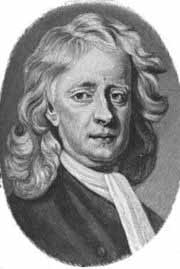
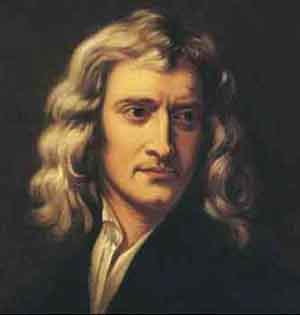
Isaac Newton

Sir Isaac Newton, President of the Royal Society, (4 January 1643 - 31 March 1727) [OS: 25 December 1642 20 March 1727] was an English mathematician, physicist, astronomer, alchemist, and natural philosopher who is generally regarded as one of the greatest scientists and mathematicians in history.
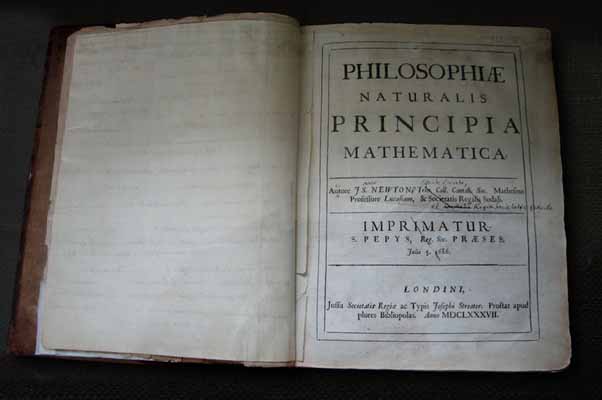
Newton wrote the Philosophiae Naturalis Principia Mathematica, in which he described universal gravitation and the three laws of motion, laying the groundwork for classical mechanics. By deriving Kepler's laws of planetary motion from this system, he was the first to show that the motion of objects on Earth and of celestial bodies are governed by the same set of natural laws. The unifying and deterministic power of his laws was integral to the scientific revolution and the advancement of heliocentrism.
Among other scientific discoveries, Newton realised that the spectrum of colours observed when white light passes through a prism is inherent in the white light and not added by the prism (as Roger Bacon had claimed in the thirteenth century), and notably argued that light is composed of particles.
He also developed a law of cooling, describing the rate of cooling of objects when exposed to air.
He enunciated the principles of conservation of momentum and angular momentum.
Finally, he studied the speed of sound in air, and voiced a theory of the origin of stars.
Despite this renown in mainstream science, Newton actually spent more time working on alchemy than physics, writing considerably more papers on the former than the latter.
Newton played a major role in the development of calculus, sharing credit with Gottfried Leibniz. He also made contributions to other areas of mathematics, for example the generalised binomial theorem. The mathematician and mathematical physicist Joseph Louis Lagrange (17361813), said that "Newton was the greatest genius that ever existed and the most fortunate, for we cannot find more than once a system of the world to establish."
Born in the hamlet of Woolsthorpe, Newton was the only son of a local yeoman, also Isaac Newton, who had died three months before, and of Hannah Ayscough. That same year, at Arcetri near Florence, Galileo Galilei had died; Newton would eventually pick up his idea of a mathematical science of motion and bring his work to full fruition. A tiny and weak baby, Newton was not expected to survive his first day of life, much less 84 years.
From the age of about twelve until he was seventeen, Newton was educated at The King's School in Grantham (where his signature can still be seen upon a library window sill). He was removed from school and by Oct 1659 he was to be found at Woolsthorpe, where his mother attempted to make a farmer of him. He was, by later reports of his contemporaries, thoroughly unhappy with the work. It appears to be Henry Stokes, master at the King's School, who persuaded his mother to send him back to school so that he might complete his education.
In June 1661 he matriculated to Trinity College, Cambridge. At that time, the college's teachings were based on those of Aristotle, but Newton preferred to read the more advanced ideas of modern philosophers such as Descartes and astronomers such as Galileo, Copernicus and Kepler.
When Newton arrived in Cambridge in 1661, the movement now known as the scientific revolution was well advanced, and many of the works basic to modern science had appeared. Astronomers from Copernicus to Kepler had elaborated the heliocentric system of the universe. Galileo had proposed the foundations of a new mechanics built on the principle of inertia. Led by Descartes, philosophers had begun to formulate a new conception of nature as an intricate, impersonal, and inert machine. Yet as far as the universities of Europe, including Cambridge, were concerned, all this might well have never happened. They continued to be the strongholds of outmoded Aristotelianism, which rested on a geocentric view of the universe and dealt with nature in qualitative rather than quantitative terms.
Like thousands of other undergraduates, Newton began his higher education by immersing himself in Aristotle's work. Even though the new philosophy was not in the curriculum, it was in the air. Some time during his undergraduate career, Newton discovered the works of the French natural philosopher René Descartes and the other mechanical philosophers, who, in contrast to Aristotle, viewed physical reality as composed entirely of particles of matter in motion and who held that all the phenomena of nature result from their mechanical interaction.
A new set of notes, which he entitled Quaestiones Quaedam Philosophicae (Certain Philosophical Questions), begun sometime in 1664, usurped the unused pages of a notebook intended for traditional scholastic exercises; under the title he entered the slogan "Amicus Plato amicus Aristoteles magis amica veritas" ("Plato is my friend, Aristotle is my friend, but my best friend is truth").
Newton's scientific career had begun.
The "Quaestiones" reveal that Newton had discovered the new conception of nature that provided the framework of the scientific revolution. He had thoroughly mastered the works of Descartes and had also discovered that the French philosopher Pierre Gassendi had revived atomism, an alternative mechanical system to explain nature. The "Quaestiones" also reveal that Newton already was inclined to find the latter a more attractive philosophy than Cartesian natural philosophy, which rejected the existence of ultimate indivisible particles.
The works of the 17th-century chemist Robert Boyle provided the foundation for Newton's considerable work in chemistry. Significantly, he had read Henry More, the Cambridge Platonist, and was thereby introduced to another intellectual world, the magical Hermetic tradition, which sought to explain natural phenomena in terms of alchemical and magical concepts. The two traditions of natural philosophy, the mechanical and the Hermetic, antithetical though they appear, continued to influence his thought and in their tension supplied the fundamental theme of his scientific career.
Although he did not record it in the "Quaestiones," Newton had also begun his mathematical studies. He again started with Descartes, from whose La Géometrie he branched out into the other literature of modern analysis with its application of algebraic techniques to problems of geometry. He then reached back for the support of classical geometry. Within little more than a year, he had mastered the literature; and, pursuing his own line of analysis, he began to move into new territory. He discovered the binomial theorem, and he developed the calculus, a more powerful form of analysis that employs infinitesimal considerations in finding the slopes of curves and areas under curves.
When Newton received the bachelor's degree in April 1665, the most remarkable undergraduate career in the history of university education had passed unrecognized. On his own, without formal guidance, he had sought out the new philosophy and the new mathematics and made them his own, but he had confined the progress of his studies to his notebooks.
Then, in 1665, the plague closed the university, and for most of the following two years he was forced to stay at his home, contemplating at leisure what he had learned. During the plague years Newton laid the foundations of the Calculus and extended an earlier insight into an essay, "Of Colors," which contains most of the ideas elaborated in his Opticks.
It was during this time that he examined the elements of circular motion and, applying his analysis to the Moon and the planets, derived the inverse square relation that the radially directed force acting on a planet decreases with the square of its distance from the Sun--which was later crucial to the law of universal gravitation. The world heard nothing of these discoveries. He chose not to share concepts he had discovered unless he was asked.
Newton became a fellow of Trinity College in 1669. In the same year he circulated his findings in De Analysi per Aequationes Numeri Terminorum Infinitas (On Analysis by Infinite Series), and later in De methodis serierum et fluxionum (On the Methods of Series and Fluxions), whose title gave rise to the "method of fluxions". Despite the fact that only a handful of savants were even aware of Newton's existence, he had arrived at the point where he had become the leading mathematician in Europe.
Newton and Gottfried Leibniz developed the calculus independently, using different notations. Although Newton had worked out his method years before Leibniz, he published almost nothing about it until 1693, and did not give a full account until 1704. Meanwhile, Leibniz began publishing a full account of his methods in 1684. Moreover, Leibniz's notation and "differential Method" were universally adopted on the Continent, and after 1820 or so, in the British Empire.
Newton claimed that he had been reluctant to publish his calculus because he feared being mocked for it. Starting in 1699, other members of the Royal Society accused Leibniz of plagiarism, and the dispute broke out in full force in 1711. Thus began the bitter calculus priority dispute with Leibniz, which marred the lives of both Newton and Leibniz until the latter's death in 1716. This dispute created a divide between British and Continental mathematicians that may have retarded the progress of British mathematics by at least a century.
Newton is generally credited with the generalized binomial theorem, valid for any exponent. He discovered Newton's identities, Newton's method, classified cubic plane curves (polynomials of degree three in two variables), made substantial contributions to the theory of finite differences, and was the first to use fractional indices and to employ coordinate geometry to derive solutions to Diophantine equations.
He approximated partial sums of the harmonic series by logarithms (a precursor to Euler's summation formula), and was the first to use power series with confidence and to revert power series. He also discovered a new formula for pi.He was elected Lucasian professor of mathematics in 1669.
In that day, any fellow of Cambridge or Oxford had to be an ordained Anglican priest. However, the terms of the Lucasian professorship required that the holder not be active in the church (presumably so as to have more time for science). Newton argued that this should exempt him from the ordination requirement, and Charles II, whose permission was needed, accepted this argument. Thus a conflict between Newton's religious views and Anglican orthodoxy was averted.

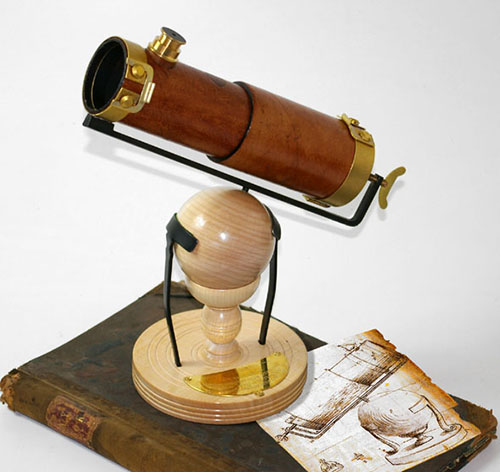
Replica of Newton's 6-inch reflecting telescope of 1672 for the Royal Society
From 1670 to 1672 he lectured on optics. During this period he investigated the refraction of light, demonstrating that a prism could decompose white light into a spectrum of colours, and that a lens and a second prism could recompose the multicoloured spectrum into white light. He also showed that the coloured light does not change its properties, by separating out a coloured beam and shining it on various objects.
Newton noted that regardless of whether it was reflected or scattered or transmitted, it stayed the same color. Thus the colors we observe are the result of how objects interact with the incident already-colored light, not the result of objects generating the color. Many of his findings in this field were criticized by later theorists, the most well-known being Johann Wolfgang von Goethe, who postulated his own color theories.
From this work he concluded that any refracting telescope would suffer from the dispersion of light into colours, and invented a reflecting telescope (today known as a Newtonian telescope) to bypass that problem.
By grinding his own mirrors, using Newton's rings to judge the quality of the optics for his telescopes, he was able to produce a superior instrument to the refracting telescope, due primarily to the wider diameter of the mirror. (Only later, as glasses with a variety of refractive properties became available, did achromatic lenses for refractors become feasible.)
In 1671 the Royal Society asked for a demonstration of his reflecting telescope. Their interest encouraged him to publish his notes On Color, which he later expanded into his Opticks.
When Robert Hooke criticized some of Newton's ideas, Newton was so offended that he withdrew from public debate. The two men remained enemies until Hooke's death.
In one experiment, to prove that color perception is caused by pressure on the eye, Newton slid a darning needle around the side of his eye until he could poke at its rear side, dispassionately noting "white, darke & colored circles" so long as he kept stirring with "ye bodkin."
Newton argued that light is composed of particles, but he had to associate them with waves to explain the diffraction of light (Opticks Bk. II, Props. XII-XX).
Later physicists instead favored a purely wavelike explanation of light to account for diffraction.
Today's quantum mechanics restores the idea of "wave-particle duality", although photons bear very little resemblance to Newton's corpuscles (e.g., corpuscles refracted by accelerating toward the denser medium).
Newton is believed to have been the first to explain precisely the formation of the rainbow from water droplets dispersed in the atmosphere in a rain shower.
Influence of the Hermetic Tradition
In his Hypothesis of Light of 1675, Newton posited the existence of the ether to transmit forces between particles. Newton was in contact with Henry More, the Cambridge Platonist who was born in Grantham, on alchemy, and now his interest in the subject revived.
During a period of isolation, Newton was greatly influenced by the Hermetic tradition with which he had been familiar since his undergraduate days.
Newton, always somewhat interested in alchemy, now immersed himself in it, copying by hand treatise after treatise and collating them to interpret their arcane imagery. Under the influence of the Hermetic tradition, his conception of nature underwent a decisive change.
Until that time, Newton had been a mechanical philosopher in the standard 17th-century style, explaining natural phenomena by the motions of particles of matter. Thus, he held that the physical reality of light is a stream of tiny corpuscles diverted from its course by the presence of denser or rarer media. He felt that the apparent attraction of tiny bits of paper to a piece of glass that has been rubbed with cloth results from an ethereal effluvium that streams out of the glass and carries the bits of paper back with it.
This mechanical philosophy denied the possibility of action at a distance; as with static electricity, it explained apparent attractions away by means of invisible ethereal mechanisms.
Newton's Hypothesis of Light of 1675, with its universal ether, was a standard mechanical system of nature. Some phenomena, such as the capacity of chemicals to react only with certain others, puzzled him, however, and he spoke of a "secret principle" by which substances are "sociable" or "unsociable" with others.
About 1679, Newton abandoned the ether and its invisible mechanisms and began to ascribe the puzzling phenomena - chemical affinities, the generation of heat in chemical reactions, surface tension in fluids, capillary action, the cohesion of bodies, and the like, to attractions and repulsions between particles of matter.
More than 35 years later, in the second English edition of the Opticks, Newton accepted an ether again, although it was an ether that embodied the concept of action at a distance by positing a repulsion between its particles. The attractions and repulsions of Newton's speculations were direct transpositions of the occult sympathies and antipathies of Hermetic philosophy--as mechanical philosophers never ceased to protest.
Newton, however, regarded them as a modification of the mechanical philosophy that rendered it subject to exact mathematical treatment. As he conceived of them, attractions were quantitatively defined, and they offered a bridge to unite the two basic themes of 17th-century science--the mechanical tradition, which had dealt primarily with verbal mechanical imagery, and the Pythagorean tradition, which insisted on the mathematical nature of reality. Newton's reconciliation through the concept of force was his ultimate contribution to science.
John Maynard Keynes, who acquired many of Newton's writings on alchemy, stated that "Newton was not the first of the age of reason: he was the last of the magicians."
Newton's interest in alchemy cannot be isolated from his contributions to science. He lived at a time when there was no clear distinction between alchemy and science. Had he not relied on the occult idea of action at a distance, across a vacuum, he might not have developed his 'theory of gravity.'
In 1704 Newton wrote Opticks, in which he expounded his corpuscular theory of light. He considered light to be made up of extremely subtle corpuscles, that ordinary matter was made of grosser corpuscles and speculated that through a kind of alchemical transmutation "Are not gross Bodies and Light convertible into one another,...and may not Bodies receive much of their Activity from the Particles of Light which enter their Composition?" Newton also constructed a primitive form of a frictional electrostatic generator, using a glass globe (Optics, 8th Query). Controversy
Among the most important dissenters to Newton's paper was Robert Hooke, one of the leaders of the Royal Society who considered himself the master in optics and hence he wrote a condescending critique of the unknown parvenu. One can understand how the critique would have annoyed a normal man. The flaming rage it provoked, with the desire publicly to humiliate Hooke, however, bespoke the abnormal. Newton was unable rationally to confront criticism. Less than a year after submitting the paper, he was so unsettled by the give and take of honest discussion that he began to cut his ties, and he withdrew into virtual isolation.
In 1675, during a visit to London, Newton thought he heard Hooke accept his theory of colors. He was emboldened to bring forth a second paper, an examination of the colour phenomena in thin films, which was identical to most of Book Two as it later appeared in the Opticks.
The purpose of the paper was to explain the colors of solid bodies by showing how light can be analyzed into its components by reflection as well as refraction. His explanation of the colors of bodies has not survived, but the paper was significant in demonstrating for the first time the existence of periodic optical phenomena.
He discovered the concentric coloured rings in the thin film of air between a lens and a flat sheet of glass; the distance between these concentric rings (Newton's rings) depends on the increasing thickness of the film of air. In 1704 Newton combined a revision of his optical lectures with the paper of 1675 and a small amount of additional material in his Opticks.
A second piece which Newton had sent with the paper of 1675 provoked new controversy. Entitled "An Hypothesis Explaining the Properties of Light," it was in fact a general system of nature. Hooke apparently claimed that Newton had stolen its content from him, and Newton boiled over again. The issue was quickly controlled, however, by an exchange of formal, excessively polite letters that fail to conceal the complete lack of warmth between the men.
Newton was also engaged in another exchange on his theory of colors with a circle of English Jesuits in Liège, perhaps the most revealing exchange of all. Although their objections were shallow, their contention that his experiments were mistaken lashed him into a fury. The correspondence dragged on until 1678, when a final shriek of rage from Newton, apparently accompanied by a complete nervous breakdown, was followed by silence. The death of his mother the following year completed his isolation. For six years he withdrew from intellectual commerce except when others initiated a correspondence, which he always broke off as quickly as possible.
In 1679, Newton returned to his work on mechanics, i.e., gravitation and its effect on the orbits of planets, with reference to Kepler's laws of motion, and consulting with Hooke and Flamsteed on the subject. He published his results in De Motu Corporum (1684). This contained the beginnings of the laws of motion that would inform the Principia.

The Philosophiae Naturalis Principia Mathematica (now known as the Principia) was published on 5 July 16871 with encouragement and financial help from Edmond Halley.
In this work Newton stated the three universal laws of motion that were not to be improved upon for more than two hundred years. He used the Latin word gravitas (weight) for the force that would become known as gravity, and defined the law of universal gravitation. In the same work he presented the first analytical determination, based on Boyle's law, of the speed of sound in air.
With the Principia, Newton became internationally recognised. He acquired a circle of admirers, including the Swiss-born mathematician Nicolas Fatio de Duillier, with whom he formed an intense relationship that lasted until 1693. The end of this friendship led Newton to a nervous breakdown.
In the 1690s Newton wrote a number of religious tracts dealing with the literal interpretation of the Bible. Henry More's belief in the infinity of the universe and rejection of Cartesian dualism may have influenced Newton's religious ideas. A manuscript he sent to John Locke in which he disputed the existence of the Trinity was never published.
Later works - The Chronology of Ancient Kingdoms Amended (1728) and Observations Upon the Prophecies of Daniel and the Apocalypse of St. John (1733) - were published after his death.
He also devoted a great deal of time to alchemy.
Newton was also a member of the Parliament of England from 1689 to 1690 and in 1701, but his only recorded comments were to complain about a cold draft in the chamber and request that the window be closed.
Newton moved to London to take up the post of warden of the Royal Mint in 1696, a position that he had obtained through the patronage of Charles Montagu, 1st Earl of Halifax, then Chancellor of the Exchequer. He took charge of England's great recoining, somewhat treading on the toes of Master Lucas (and finagling Edmond Halley into the job of deputy comptroller of the temporary Chester branch). Newton became perhaps the best-known Master of the Mint upon Lucas' death in 1699, a position Newton held until his death. These appointments were intended as sinecures, but Newton took them seriously, retiring from his Cambridge duties in 1701, and exercising his power to reform the currency and punish clippers and counterfeiters.
As Master of the Mint Newton unofficially moved the Pound Sterling to the gold standard from silver in 1717; great reforms at the time and adding considerably to the wealth and stability of England. It was his work at the Mint, rather than his earlier contributions to science, that earned him a knighthood from Queen Anne in 1705.
Newton was made President of the Royal Society in 1703 and an associate of the French Académie des Sciences. In his position at the Royal Society, Newton made an enemy of John Flamsteed, the Astronomer Royal, by prematurely publishing Flamsteed's star catalogue.
Newton died in London on March 20th, 1727, and was buried in Westminster Abbey. His half-niece, Catherine Barton Conduitt, served as his hostess in social affairs at his house on Jermyn Street in London; he was her "very loving Uncle", according to his letter to her when she was recovering from smallpox. Newton died intestate and his considerable estate was divided between his half-nieces and half-nephews.
After his death, Newton's body was discovered to have had massive amounts of mercury in it, probably resulting from his alchemical pursuits. Mercury poisoning could explain Newton's eccentricity in late life.
The law of gravity became Newton's best-known discovery. He warned against using it to view the universe as a mere machine, like a great clock. He said, "Gravity explains the motions of the planets, but it cannot explain who set the planets in motion. God governs all things and knows all that is or can be done."
His scientific fame notwithstanding, Newton's study of the Bible and of the early Church Fathers were among his greatest passions. He devoted more time to the study of the Scriptures, the Fathers, and to Alchemy than to science, and said, "I have a fundamental belief in the Bible as the Word of God, written by those who were inspired. I study the Bible daily."
Newton himself wrote works on textual criticism, most notably An Historical Account of Two Notable Corruptions of Scripture.
Newton also placed the crucifixion of Jesus Christ at 3 April, AD 33, which is now the accepted traditional date. He also attempted, unsuccessfully, to find hidden messages within the Bible.
Despite his focus on theology and alchemy, Newton tested and investigated these ideas with the scientific method, observing, hypothesising, and testing his theories. To Newton, his scientific and religious experiments were one and the same, observing and understanding how the world functioned.
Newton rejected the church's doctrine of the trinity, and was probably a follower of arianism. In a minority view, T.C. Pfizenmaier argues that he more likely held the Eastern Orthodox view of the Trinity rather than the Western one held by Roman Catholics, Anglicans, and most Protestants.
In his own day, he was also accused of being a Rosicrucian (as were many in the Royal Society and in the court of Charles II).
In his own lifetime, Newton wrote more on religion than he did on natural science. He believed in a rationally immanent world, but he rejected the hylozoism implicit in Leibniz and Baruch Spinoza. Thus, the ordered and dynamically informed universe could be understood, and must be understood, by an active reason, but this universe, to be perfect and ordained, had to be regular.
Newton and Robert Boyle's mechanical philosophy was promoted by rationalist pamphleteers as a viable alternative to the pantheists and enthusiasts, and was accepted hesitantly by orthodox preachers as well as dissident preachers like the latitudinarians.
Thus, the clarity and simplicity of science was seen as a way to combat the emotional and metaphysical superlatives of both superstitious enthusiasm and the threat of atheism, and, at the same time, the second wave of English deists used Newton's discoveries to demonstrate the possibility of a "Natural Religion."
The attacks made against pre-Enlightenment "magical thinking," and the mystical elements of Christianity, were given their foundation with Boyle¹s mechanical conception of the universe. Newton gave Boyle¹s ideas their completion through mathematical proofs, and more importantly was very successful in popularising them.
The perceived ability of Newtonians to explain the world, both physical and social, through logical calculations alone is the crucial idea in the disenchantment of Christianity.
Newton saw God as the master creator whose existence could not be denied in the face of the grandeur of all creation.
But the unforeseen theological consequence of his conception of God, as Leibniz pointed out, was that God was now entirely removed from the world¹s affairs, since the need for intervention would only evidence some imperfection in God¹s creation, something impossible for a perfect and omnipotent creator.
Leibniz's theodicy cleared God from the responsibility for "l'origine du mal" by making God removed from participation in his creation. The understanding of the world was now brought down to the level of simple human reason, and humans, as Odo Marquard argued, became responsible for the correction and elimination of evil.
On the other hand, latitudinarian and Newtonian ideas taken too far resulted in the millenarians, a religious faction dedicated to the concept of a mechanical universe, but finding in it the same enthusiasm and mysticism that the Enlightenment had fought so hard to extinguish.
As warden of the royal mint, Newton estimated that 20% of the coins taken in during The Great Recoinage were counterfeit. Counterfeiting was treason, punishable by death by drawing and quartering. Despite this, convictions of the most flagrant criminals could be extremely difficult to achieve; however, Newton proved to be equal to the task.
He gathered much of that evidence himself, disguised, while he hung out at bars and taverns. For all the barriers placed to prosecution, and separating the branches of government, English law still had ancient and formidable customs of authority.
Newton was made a justice of the peace and between June 1698 and Christmas 1699 conducted some 200 cross-examinations of witnesses, informers and suspects. Newton later ordered all records of his interrogations to be destroyed. Newton won his convictions and in February 1699, he had ten prisoners waiting to be executed.
Newton's greatest triumph as the king's attorney was against William Chaloner. One of Chaloner's schemes was to set up phony conspiracies of Catholics and then turn in the hapless conspirators whom he entrapped. Chaloner made himself rich enough to posture as a gentleman.
Petitioning Parliament, Chaloner accused the Mint of providing tools to counterfeiters (a charge also made by others). He proposed that he be allowed to inspect the Mint's processes in order to improve them. He petitioned Parliament to adopt his plans for a coinage that could not be counterfeited, while at the same time striking false coins. After being exposed by Newton, Chaloner was hanged, drawn and quartered on March 23, 1699.
Enlightenment philosophers chose a short history of scientific predecessors - Galileo, Boyle, and Newton principally - as the guides and guarantors of their applications of the singular concept of Nature and Natural Law to every physical and social field of the day. In this respect, the lessons of history and the social structures built upon it could be discarded.
It was Newton¹s conception of the universe based upon Natural and rationally understandable laws that became the seed for Enlightenment ideology. Locke and Voltaire applied concepts of Natural Law to political systems advocating intrinsic rights; the physiocrats and Adam Smith applied Natural conceptions of psychology and self-interest to economic systems and the sociologists criticised the current social order for trying to fit history into Natural models of progress. Monboddo and Samuel Clarke resisted elements of Newton's work, but eventually rationalised it to conform with their strong religious views of nature.
Newton's laws of motion and gravity provided a basis for predicting a wide variety of different scientific or engineering situations, especially the motion of celestial bodies. His calculus proved vitally important to the development of further scientific theories.
Finally, he unified many of the isolated physics facts that had been discovered earlier into a satisfying system of laws. Newton's conceptions of gravity and mechanics, though not as accurate as Einstein's Theory of Relativity or quantum mechanics, still represent an enormous step in the evolution of human understanding of the universe. For this reason, he is generally considered one of history's greatest scientists.